Every 40 seconds, someone in the US has a cardiac arrest — and starting CPR immediately can double or triple their chance of survival. This is the calm, clear playbook every adult should know.
Accuracy note: This guide has been written in line with current CPR guidelines published by the American Heart Association and the American Red Cross.
Every 40 seconds, someone in the United States has a cardiac arrest. Of those who experience cardiac arrest outside a hospital, nearly 90% die — not because help wasn't nearby, but because bystanders didn't act. CPR (Cardiopulmonary Resuscitation) can double or even triple a person's chance of survival when started immediately. You don't need to be a doctor. You don't need a certificate on the wall. You just need to know what to do and be willing to act.
What Is CPR and Why Does It Matter?
CPR is an emergency lifesaving technique used when someone's heart has stopped beating or they have stopped breathing normally. It combines chest compressions, which manually pump blood around the body, with rescue breaths, which deliver oxygen to the lungs.
The goal of CPR is not to restart the heart (that is what a defibrillator does). The goal is to keep oxygenated blood flowing to the brain and vital organs until emergency services arrive. Brain damage begins within 4–6 minutes of no blood flow. After 10 minutes without CPR, survival chances drop dramatically.
Starting CPR immediately bridges the gap between collapse and the arrival of paramedics — a gap that is often 8–12 minutes in most cities.
Hands-Only CPR vs. Full CPR: What's the Difference?
Hands-only CPR
Chest compressions only — no rescue breaths. The American Heart Association recommends this for bystanders who witness an adult suddenly collapse and are not trained or not confident giving rescue breaths. Highly effective in the first few minutes of cardiac arrest because the blood still contains residual oxygen.
Full CPR (30:2)
30 chest compressions combined with 2 rescue breaths. This is what's taught in accredited CPR courses and is recommended for trained bystanders, for cardiac arrest in children, drowning victims, or when arrest was caused by respiratory failure.
For most adults who collapse unexpectedly, hands-only CPR is a perfectly valid and potentially lifesaving response if you are untrained or unsure about rescue breaths.
Before You Start: Check, Call, Compress
1Check the scene is safe
Before approaching, scan the environment. Is there a risk of traffic, electrical hazard, fire, or structural collapse? Do not put yourself in danger — you cannot help if you become a casualty too.
2Check the person
Tap their shoulders firmly and shout: "Are you okay? Can you hear me?" Look for any response — eye movement, sounds, movement of limbs. If there is no response:
- Check for normal breathing. Tilt their head back gently, lift the chin, and look, listen, and feel for breathing for no more than 10 seconds. Occasional gasping (agonal breathing) is NOT normal breathing — begin CPR.
- Check for a pulse at the carotid artery (side of the neck) for no more than 10 seconds. If you are not confident, do not waste time — if they are unresponsive and not breathing normally, begin CPR.
3Call 911 (or have someone else call)
If you are alone, call 911 yourself, put it on speaker, and begin CPR. The dispatcher will guide you. Ask someone to find an AED (Automated External Defibrillator) immediately — many public spaces have them, and they are simple to use.
Step-by-Step CPR for Adults
1Position the person correctly
Lay the person on their back on a firm, flat surface. The ground is ideal — a soft mattress or sofa will absorb the compression force and make CPR ineffective. Kneel beside their chest.
2Position your hands
Place the heel of one hand on the centre of the person's chest — on the lower half of the sternum (breastbone), between the nipples. Place your other hand on top, interlacing your fingers. Keep your fingers raised so only the heel of your bottom hand contacts the chest.
This hand position is important: too high and you risk ineffective compressions; too low and you may damage the xiphoid process (the small bone at the bottom of the sternum) or internal organs.
3Deliver chest compressions
With straight arms, compress the chest downward by at least 2 inches (5 cm) — but no more than 2.4 inches (6 cm). Then allow the chest to fully recoil (rise back up) before the next compression. Full recoil is critical — it allows the heart to refill with blood between compressions.
Rate: 100–120 compressions per minute. This is faster than most people expect. The beat of the song "Stayin' Alive" by the Bee Gees is almost exactly 100 beats per minute — a widely used and AHA-endorsed memory aid.
Count out loud as you compress to maintain rhythm and keep track of cycles.
4Give rescue breaths (full CPR only — skip for hands-only)
After 30 compressions, give 2 rescue breaths:
- Tilt the person's head back by placing one hand on their forehead and lifting the chin with two fingers of the other hand. This opens the airway.
- Pinch the nose closed with your thumb and forefinger.
- Create a seal over their mouth with yours.
- Breathe in steadily for about 1 second and watch for the chest to rise. If the chest does not rise, reposition the head and try once more.
- Give the second breath.
- Return immediately to chest compressions.
If rescue breaths are difficult or the airway is blocked, do not persist — return to compressions. Compressions alone are far better than stopping to repeatedly attempt failed rescue breaths.
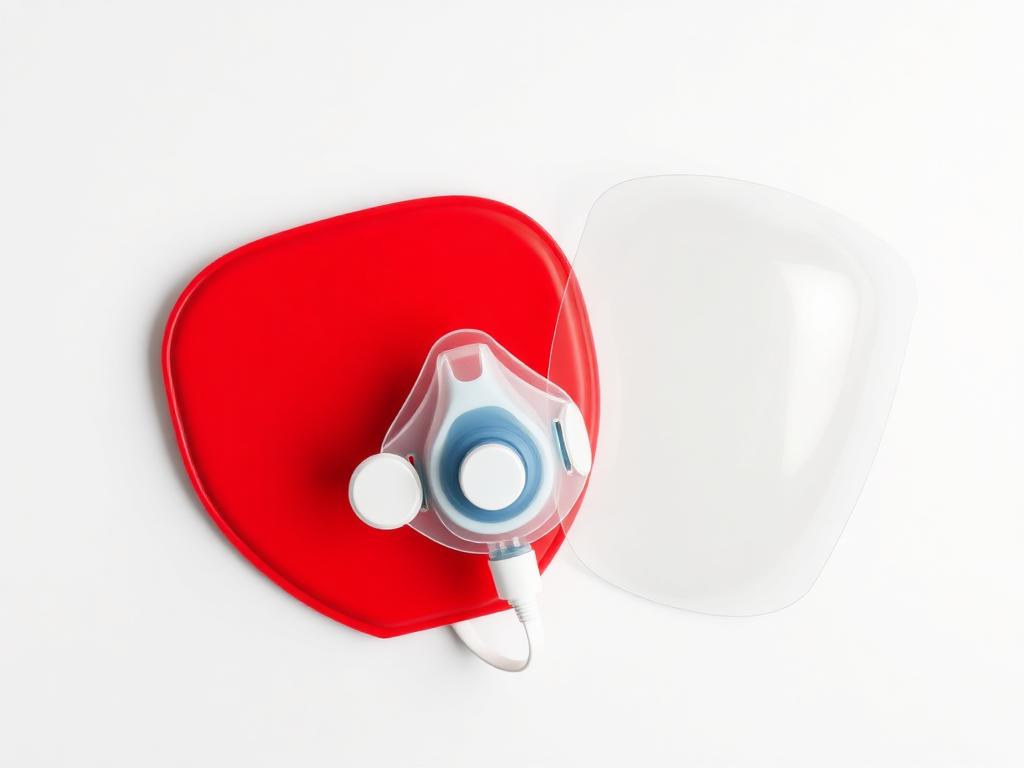
Product recommendation: A CPR face shield or pocket mask creates a hygienic barrier between you and the person during rescue breaths. Many first aid kits do not include one as standard.
5Continue cycles of 30:2
Repeat the cycle of 30 compressions and 2 rescue breaths (or continuous compressions if doing hands-only CPR). Do not stop unless:
- The person shows clear signs of life — normal breathing, movement, or opens their eyes
- A trained medical professional takes over
- An AED is ready to use (pause for analysis and shock delivery, then resume immediately)
- You are physically unable to continue and no one else can take over
- The scene becomes unsafe
How to Use an AED Alongside CPR
An AED (Automated External Defibrillator) is a device that delivers an electrical shock to restore a normal heart rhythm in cases of certain cardiac arrest rhythms (ventricular fibrillation or ventricular tachycardia). AEDs are designed for untrained bystander use — they talk you through every step.
AEDs are found in: airports, shopping centres, gyms, offices, schools, and many public buildings. Look for the green AED sign.
How to use an AED:
- Turn it on — most units turn on when you open the lid or press a button. It will begin giving voice instructions.
- Attach the pads to the bare chest — one pad below the right collarbone, one on the left side below the armpit. Dry the chest first if wet. Remove any medication patches.
- Stand clear during analysis — do not touch the person while the AED analyses the heart rhythm.
- Deliver the shock if advised — press the shock button when prompted. Stand clear and announce "Stand clear!" loudly.
- Resume CPR immediately after the shock — do not wait to see if there is a pulse. Resume 30:2 CPR right away and continue until the AED instructs another analysis (usually every 2 minutes).
If the AED advises "no shock recommended," resume CPR immediately and continue.
Product recommendation: Home AEDs are increasingly affordable and can be the difference between life and death before emergency services arrive.
CPR for Special Situations
If someone is pregnant
Perform CPR as normal. Do not be afraid of harming the baby — without CPR, neither the mother nor the baby will survive. If possible, tilt the person slightly to the left side (place something under the right hip) to reduce pressure on the vena cava. Compressions remain on the centre of the chest.
If the person has a do-not-resuscitate (DNR) order
If you are aware of a valid DNR order and can confirm it quickly, you may withhold CPR. If you are unsure, begin CPR — acting in good faith to save a life is legally and ethically protected in all US states under Good Samaritan laws.
If the person is very obese
Compressions may need more force to achieve adequate depth. Hand position remains the same. If compressions are ineffective, continue — some blood flow is better than none.
If you suspect a spinal injury (e.g. after a fall or accident)
Do not move the person unnecessarily, but do not withhold CPR if they are in cardiac arrest. Survival from cardiac arrest takes priority. Minimize head and neck movement when opening the airway — use a jaw-thrust manoeuvre if trained, or standard head-tilt chin-lift if not.
Common CPR Mistakes to Avoid
Even well-meaning bystanders make these mistakes under pressure
- Not compressing deep enough — 2 inches minimum. Most people under-compress because it feels like a lot of force on another person's chest.
- Compressing too slowly — aim for 100–120 per minute. Count out loud to keep pace.
- Not allowing full chest recoil — leaning on the chest between compressions stops the heart from refilling. Lift completely after each push.
- Stopping to check for a pulse too often — minimize interruptions. Check only when you see clear signs of life.
- Tilting the head incorrectly — insufficient head tilt means a partially blocked airway and ineffective rescue breaths.
- Giving up too soon — CPR is exhausting, but survival rates improve significantly with continuous, quality compressions. Switch with another bystander if possible.
Should You Get CPR Certified?
Reading this guide is a valuable start — but it is not the same as hands-on CPR training. An accredited course gives you practice on a manikin, real-time feedback on compression depth and rate, and the confidence to act without hesitation in an emergency.
CPR certification courses are available through:
- The American Red Cross — in-person and online/blended options
- The American Heart Association — Heartsaver CPR/AED courses
- The National Safety Council
- Many local fire departments, hospitals, and community centres offer free or low-cost classes
Certification is typically valid for 2 years, after which a refresher course is recommended.
Product recommendation: A CPR training manikin lets you and your household practise at home between courses.
Building a Cardiac-Ready First Aid Kit
CPR alone is not the only preparation you can make. A well-equipped home first aid kit with the right additions can improve your readiness significantly.
What to add to your kit for cardiac emergencies:
| Item | Purpose |
|---|---|
| CPR face shield or pocket mask | Hygienic barrier for rescue breaths |
| Disposable gloves | Infection control |
| AED (home unit) | Restore normal heart rhythm |
| Emergency contact card | List of medical conditions, medications, allergies |
| Torch / penlight | Check pupils and visibility in low light |
Product recommendation: A comprehensive home first aid kit, with the additions above, gives your household strong baseline preparedness.
Frequently Asked Questions
+How many chest compressions per minute should CPR have?
The American Heart Association recommends a rate of 100–120 compressions per minute. The beat of "Stayin' Alive" by the Bee Gees is approximately 100 bpm and is a widely recognized memory aid for maintaining the correct pace.
+How deep should CPR compressions be?
At least 2 inches (5 cm) but no more than 2.4 inches (6 cm) for adults. Most bystanders under-compress — don't be afraid to apply firm, consistent pressure.
+What should I do if someone stops breathing?
Call 911 immediately, check for a pulse, and begin CPR if the person is unresponsive and not breathing normally. Occasional gasping (agonal breathing) is not normal breathing — begin CPR. Continue until paramedics arrive or the person shows clear signs of recovery.
+Can I do CPR without training?
Yes. Hands-only CPR — continuous chest compressions with no rescue breaths — is recommended by the American Heart Association for untrained bystanders. It is far better than doing nothing. Call 911 first and the dispatcher will guide you through the steps.
+What is hands-only CPR?
Hands-only CPR is chest compressions only, without rescue breaths. It is effective in the first few minutes of cardiac arrest in adults and is the recommended method for untrained bystanders. Rate and depth guidelines are the same: 100–120 compressions per minute, at least 2 inches deep.
+How long should I continue CPR?
Continue CPR until the person shows clear signs of life (normal breathing, movement), a trained medical professional takes over, an AED is ready to use (pause for shock, then resume), or you are physically unable to continue and no one else is available.
+Does CPR always save someone's life?
CPR significantly improves survival chances but does not guarantee survival. Its primary role is to buy time by maintaining blood flow until advanced medical care, including defibrillation and drugs, can be delivered. The sooner CPR begins, the better the outcome.
The Bottom Line
Cardiac arrest does not wait for a convenient moment, and most of the time it happens at home — not in a hospital. Knowing the CPR steps every adult should know — check, call, compress, and continue — costs nothing but a few minutes of learning and could be the reason someone you love survives.
Take a certified CPR course, make sure your home has a well-stocked first aid kit, and consider adding a CPR face shield and a home AED to your preparedness plan. The life you save is far more likely to be someone you know than a stranger.
Sources
Stay prepared
Knowing the steps is half the battle — having the right gear is the other half. Browse our kit recommendations next.
Browse Kit Recommendations →Affiliate disclosure: This post contains affiliate links. As an Amazon Associate we earn from qualifying purchases — at no extra cost to you.
Related posts
How to Treat a Deep Cut at Home: A Step-by-Step First Aid Guide
A calm, step-by-step first aid guide to safely cleaning, closing, and dressing a deep cut at home — and knowing exactly when to head to the ER.

Recognizing the Signs of a Stroke: What to Do and How Technology Can Help
Learn how to recognize the signs of a stroke using the FAST and BE-FAST methods, what to do in the first minutes, and how smartwatches and apps can help detect strokes early.
Johnson & Johnson BAND-AID 160-Piece First Aid Kit Review: Is It Worth Buying in 2026?
Is the Johnson & Johnson BAND-AID 160-piece first aid kit worth it in 2026? Our expert review covers contents, pros, cons, scoring, and who should buy it.